Alphabet Color Trace and Writing Sheets for Early Learners
As someone who spends their days managing brand assets and typography, I often find myself looking for the "perfect" typeface for high-stakes corporate identities. However, the most impactful design work often happens at the very beginning of the journey. When we talk about Alphabet Color Trace and Writing Sheets, we aren't just discussing a set of printables; we are looking at the foundational toolkit for literacy. For parents, educators, and content creators in the educational niche, these sheets represent a bridge between abstract symbols and concrete understanding.
The Anatomy of the Activity: What Makes These Sheets Effective?
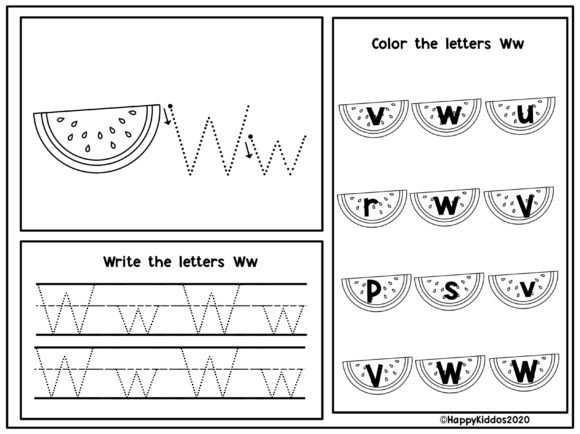
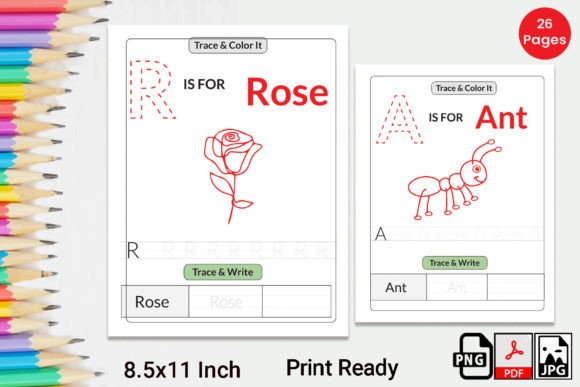
From a design perspective, the efficacy of Alphabet Color Trace and Writing Sheets lies in their visual hierarchy and clarity. Unlike complex graphic design projects where we layer textures and effects, this interior requires a minimalist, user-centric approach. The visual characteristics are intentionally straightforward: bold, clean outlines for coloring, dotted pathways for tracing, and ample negative space for independent writing. This isn't about flashy modern typography; it is about functional, legible letterforms that teach the motor skills required for writing.
The "personality" of these sheets is one of encouragement. The templates are designed to be easy to use, removing the intimidation factor for a child holding a crayon for the first time. You will find that the structure supports a logical progression: first, the child engages with the shape through coloring, which builds recognition. Next, they trace, which builds muscle memory. Finally, they attempt the letter independently. This three-step process is a practical application of instructional design, ensuring that the student isn't overwhelmed. For the creator or publisher, this means the product isn't just a random collection of pages; it is a cohesive learning system contained in 26 PDF Pages, 26 JPG files, and 26 PNG files.
Strategic Application: Beyond the Classroom
While the primary audience is parents and teachers, the utility of these assets extends into the professional sphere of content creation. If you are a blogger focusing on homeschooling, a publisher of educational materials, or a small business owner creating activity books for Amazon KDP, this interior is a critical design asset.
Consider the workflow efficiency. Instead of commissioning a handwritten font or a specific script font for educational use, and then manually laying out guides and baselines, you are purchasing a ready to print solution. The files are formatted at 8.5"x11" with 300 dpi, ensuring high-quality output whether you are printing them at home for your own child or uploading them to a print-on-demand service. For those in the digital space, the inclusion of PNGs allows for easy integration into digital planners or virtual learning environments.
Furthermore, the versatility of the Alphabet Color Trace and Writing Sheets makes them suitable for a variety of niches:
- Content Creators: Use the sheets as a free lead magnet to grow an email list for a parenting newsletter.
- Educational Publishers: Bundle these with other design assets to create comprehensive workbooks.
- Therapists: Occupational therapists often use tracing exercises to help children with fine motor delays; these sheets provide a professional, standardized tool for that purpose.
Design Quality and Technical Specifications
In the world of premium fonts and high-end assets, we are obsessed with technical specs. The same standard should apply to educational printables. The creators of this interior have ensured it is KDP Tested. This is a significant value proposition. It means the margins, bleed areas, and resolution have been verified to meet Amazon’s strict publishing guidelines. You won't face rejection headaches due to low resolution or incorrect sizing.
The visual style of the letters used in these sheets acts as a generic sans serif font style—clean, geometric, and sans-serififs—making it the ideal model for early learners. It avoids the stylistic flourishes of a decorative display font or the complexity of a serif font, which can confuse young eyes trying to distinguish between a stem and a serif. This is a practical application of typographic legibility theory applied to early childhood education.
Enhancing the Learning Experience
If you are looking to improve the Trace color and writing skill of your students, consistency is key. The unique and creative templates provided in this set allow for repetitive practice without visual boredom. Each page offers a fresh context for the letter, keeping the child engaged.
For those looking to build a brand around educational resources, utilizing high-quality interiors like this one establishes credibility. When a parent downloads a worksheet that looks professional—clean lines, sharp printing, and thoughtful layout—they trust the source. This is the equivalent of good brand identity in the educational sector.
I recommend integrating these sheets into a broader curriculum. Pair them with letter sounds, physical objects that start with the letter, and verbal repetition. The sheets provide the visual and tactile component, but the learning is solidified when combined with other sensory inputs.
Final Thoughts on Utility
Whether you are a parent working with your toddler at the kitchen table or a marketer designing a digital product for a parenting audience, the Alphabet Color Trace and Writing Sheets offer a robust solution. They strip away the unnecessary complexity and focus on what matters: clear communication of the alphabet. With 26 distinct letters covered in multiple formats, you have everything you need to start teaching immediately. It is a practical, well-executed tool that bridges the gap between play and education.